

Nourishing Menus: Practical Guide to Food Fortification
Protein and energy needs are increased in residential care, and older people may require additional support to maintain health and prevent malnutrition. This guide explores food fortification strategies that help improve nutritional intake through everyday meals, snacks, and drinks.





Look for ways to add protein

- All soups should have meat &/or legumes &/or skim milk powder
- Offer nourishing dairy based drinks at all meals and mid-meals
- Use fortified milk for porridge, drinks and desserts whenever possible.
- Add skim milk powder into baking, sauces, mash and desserts
- Look for opportunities to add legume flours, nut meal or egg powder.
- Add legumes and lentils to soups, casseroles, curries, salads, vegetarian patties
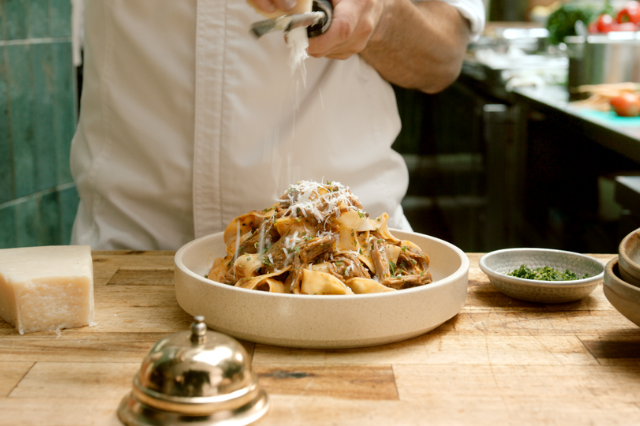
- Add cheese to meals e.g. in mash potato, sauces, soups, baking and pasta
- If tolerated, include nuts as a snack and in cooking.
- Offer nut spreads at breakfast and mid-meals.
- Have milk, cheese, yoghurt and custard available anytime.
Look for ways to add energy
- Add margarine or butter to vegetables; use on bread, toast and crackers. Offer avocado as an alternative spread. Some cultures may prefer oil with bread and vegetables.
- Add cream to soups or desserts
- Use full fat dairy foods
- Add plenty of oil in cooking
- Complete salads with dressings, cheese and nuts (if tolerated)
Bake in-house

Baking in-house allows you to maximise nutrition provided to your residents.
- Mid-meals can be boosted by including fruit or vegetables for fibre, vitamins and minerals. Think blueberry muffins or zucchini slices.
- Fibre can also be added by including some wholemeal flour. Up to 1/3 flour can be exchanged for wholemeal with minimal impact on the dish form and function.
- Cheese and skim milk powder can be included for energy, protein and calcium.
- Making desserts in-house helps ensure they’re jam-packed with nutrition, for example, added fruit or fortified milk.
Nutritious alternatives lists

Alternative lists are useful tools to offer choice to residents, so it’s important that they offer opportunities to meet energy and protein needs. The following are nutritious and are generally easy for the kitchen to accommodate:
- Omelette/frittata/scramble / boiled eggs, made with 2 eggs
- Tinned or steamed fish (choose oily if possible), 100 – 120g per serve
- Tuna patties or vegetable patties from legumes, 150 – 200g per serve
- Salad – 100g meat / chicken / fish / cheese + salad + pasta / rice / bread roll
- Sandwich – at least 50g meat/chicken/fish/cheese
Note that favourite foods such as mini pies or sausage rolls often don’t have enough protein in a serve size that an older person will eat. These are better saved for special occasions or may be an option for supper, depending on the rest of the menu.
Fortified milk recommended recipe
1L full cream milk + 1 cup skim milk powder
