

Bulk Gravy vs Scratch-Made Gravy: Which Delivers Better Consistency in Busy Kitchens?
A stand-out gravy can truly elevate any dish and leave your customers with a memorable dining experience. In this article, we compare bulk and scratch-made gravy across prep time and consistency, explore how a quality base can still deliver flavourful gravy derivatives, and uncover why bulk gravy is the clear winner for busy commercial kitchens.





Every kitchen that plates a roast, a schnitzel or a bowl of chips at volume eventually faces the same question: do you make gravy from scratch, or do you build it from a bulk base? Flavour and taste come into consideration, but it is just as much a decision about labour, consistency and what your team can realistically deliver at scale. This article compares bulk gravy and scratch-made gravy across prep time, consistency and holding stability and shows how chefs use a reliable base to build premium gravy and sauces that still taste like their own.
Understanding the Gravy Question in Commercial Kitchens
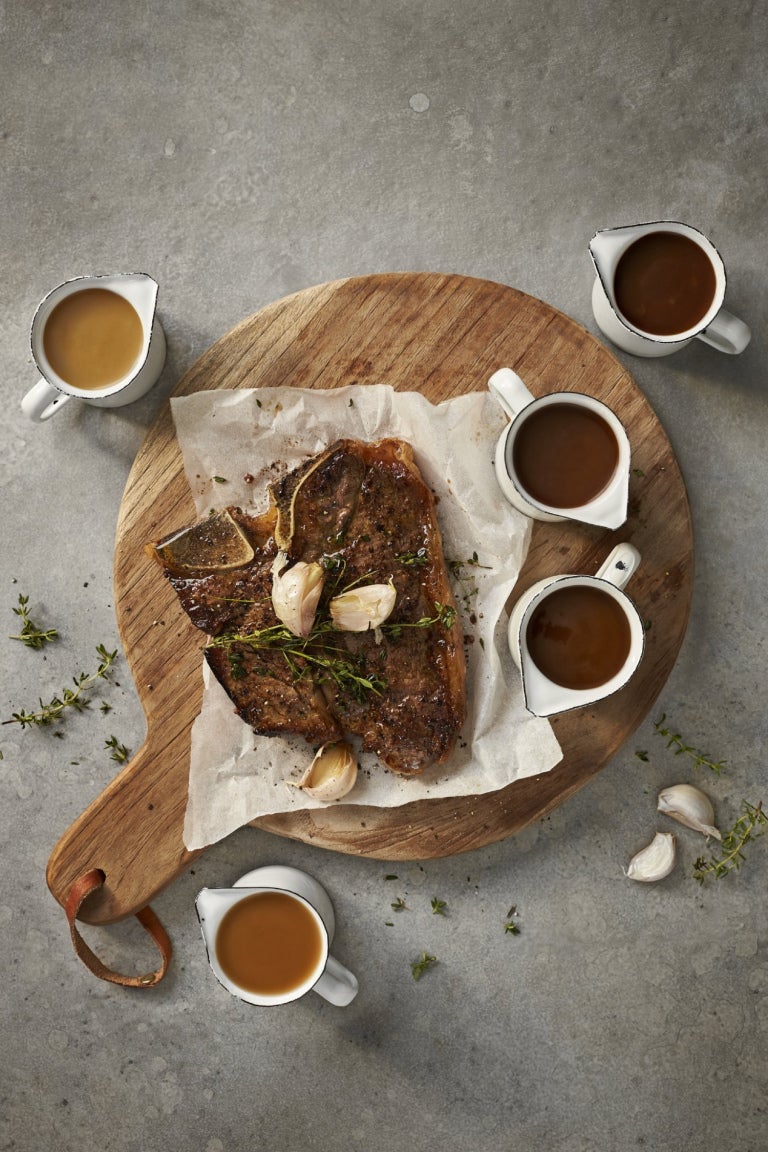
Gravy is often the side pairing to the hero protein but in pubs, clubs, catering and aged care it is the finish that diners remember. It is the touch that pulls a plate together and lifts the dish it sits alongside. It often needs to look the same at 6pm and at 9pm, taste the same on Tuesday as it does on Sunday and hold through a long service without splitting or skinning. Add tight labour, variable skill levels and rising ingredient costs and the choice between scratch and bulk starts to become a commercial decision rather than a purely culinary one.
What Counts as Scratch-Made Gravy
Scratch-made gravy is built in-house for each service. It starts with pan drippings or roasted bones, moves through a stock reduction and is thickened with a roux or a slurry before being seasoned and strained. It is made fresh, is often determined by whatever protein you have roasted that day and requires steady attention on the stove.
What Counts as Bulk or Commercial Gravy
Bulk gravy covers powdered mixes, ready-to-use pouches and demi-glace or jus-style bases prepared to a set water ratio. The important distinction is that a bulk gravy is a base to build on, not a shortcut that replaces culinary skill. It gives you a consistent, reliable starting point and what you do with it from there is where your culinary expertise has the opportunity to come through.
The Real Cost of Making Gravy From Scratch
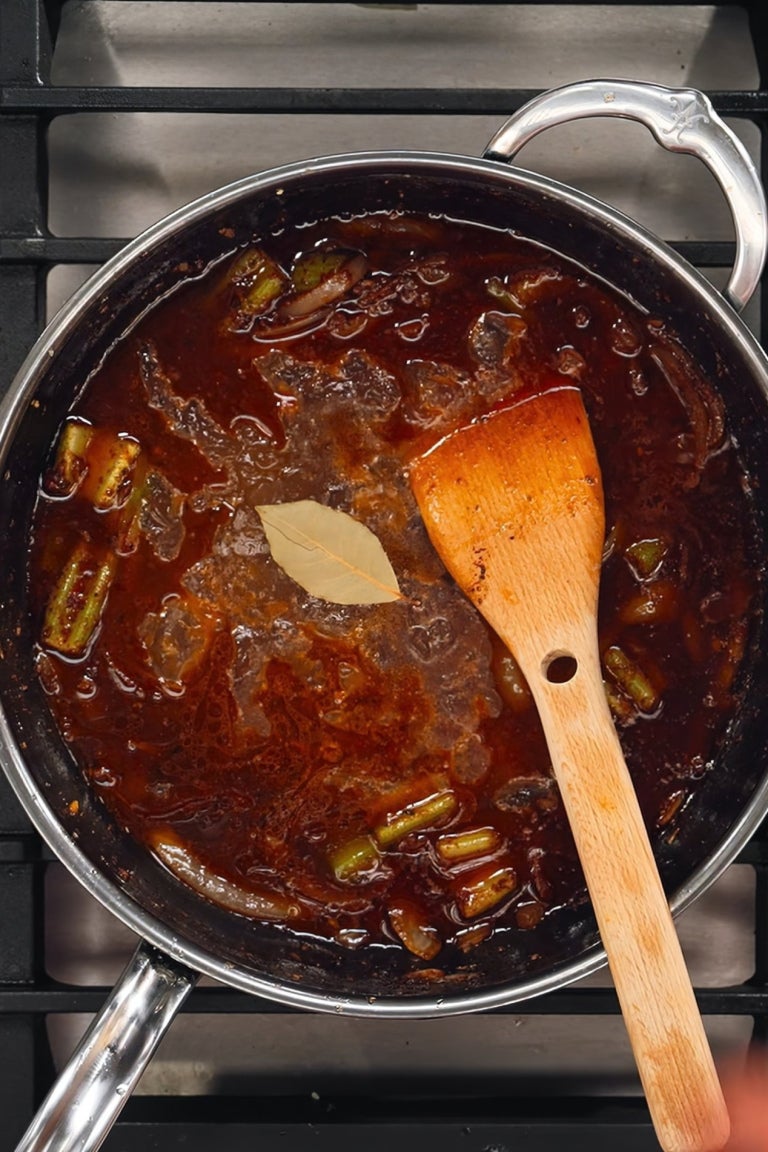
The cost of a scratch gravy is rarely just what shows up in the numbers. It sits in the hours it takes to prepare and in the yield you potentially lose along the way.
Labour and Prep Time Per Service
A proper scratch gravy is not a fifteen-minute job. Roasting bones, building and hours spent skimming the stock, reducing it down and finishing the sauce can occupy a section of your bench for the better part of a shift. One batch also often needs to be extended to meet the large volume demands for the kitchen and requires someone experienced enough to judge when the reduction is right. In a kitchen that is short-staffed, that is time taken away from prep and plating.
Ingredient Cost and Food Waste
Stock reduces heavily, so a large volume of liquid becomes a modest volume of sauce and that yield loss is easy to underestimate when costing a dish. Protein and stock also move in price and availability, which makes forecasting difficult. Batches that over-reduce or fall short of the pass are poured away and every litre lost is labour and product gone with it.
Why Bulk Gravy is the Answer to Consistency Challenges in Service
Scratch gravy often varies for reasons that sit outside anyone’s control: the base, the reduction, the pan and the chef on shift. For a single-site venue that may be manageable. For a group operating across multiple sites, or a kitchen with high staff turnover, that variation can become a commercial risk as well as a quality one. This is where a bulk gravy base earns its place. It holds steady the parts of the sauce that are hardest to repeat, so your team can put their time into the plate rather than into rescuing the pot and offers a consistent flavour base which chefs can make their own.
Bain Marie Holding and Stability
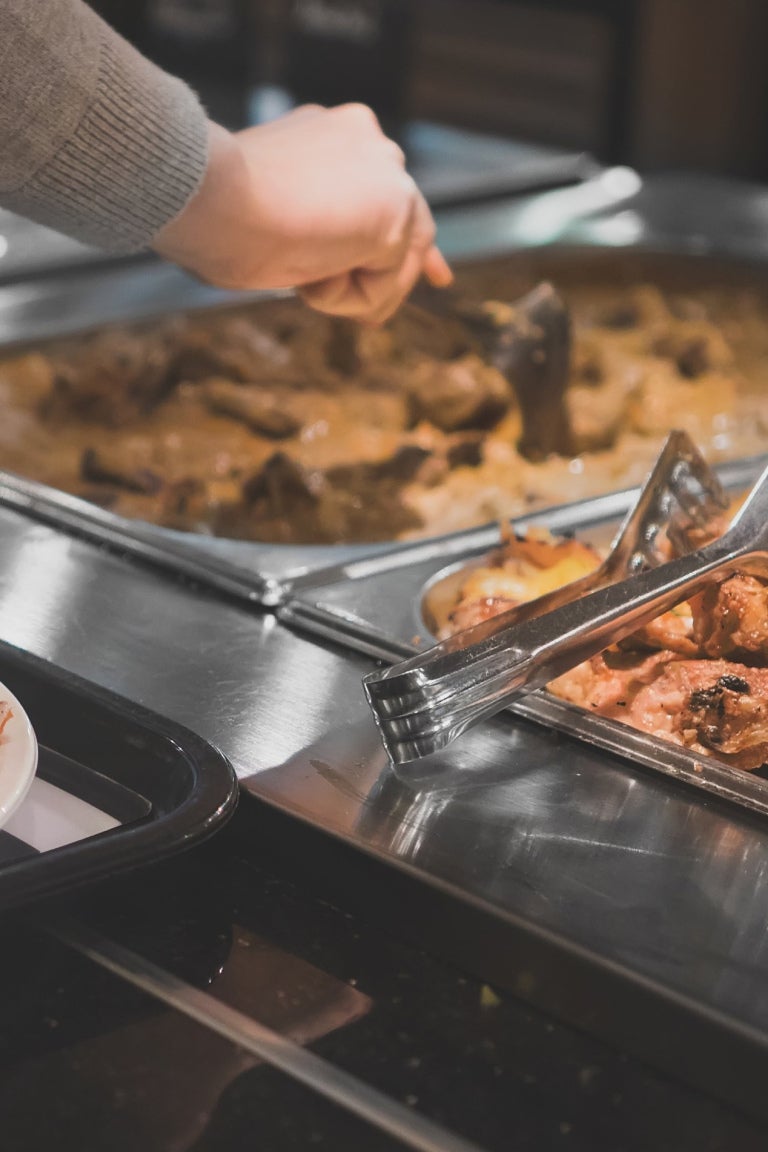
Holding is where most gravies show their weaknesses. A scratch sauce left in the bain marie will skin over, separate or thicken past the point of pouring and it needs constant attention to stay serviceable. The MAGGI Gravy range is bain marie stable*, so it holds its colour, body and seasoning across a long service without needing to be rescued between covers.
Cook-Chill, Freeze-Thaw and Volume Catering
For aged care, events and central production kitchens, gravy is rarely served the moment it is made. It is produced in volume, chilled or frozen, transported and then reheated on site. A sauce that cannot survive that journey is not fit for service. The MAGGI Gravy range is cook-chill stable^ and freeze-thaw stable#, so the gravy that reaches the plate after reheating looks and tastes like the one that left the production kitchen.
Comparing the MAGGI Gravy Range
Not every dish calls for the same gravy. The MAGGI Gravy range is built so you can match the sauce to the protein without holding four different scratch recipes, giving you a reliable, flavourful base to build on – your kitchen’s MVP.
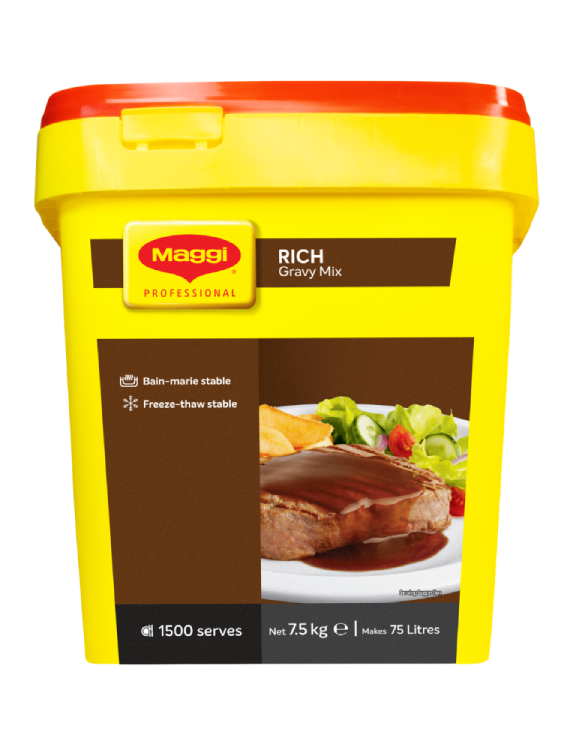
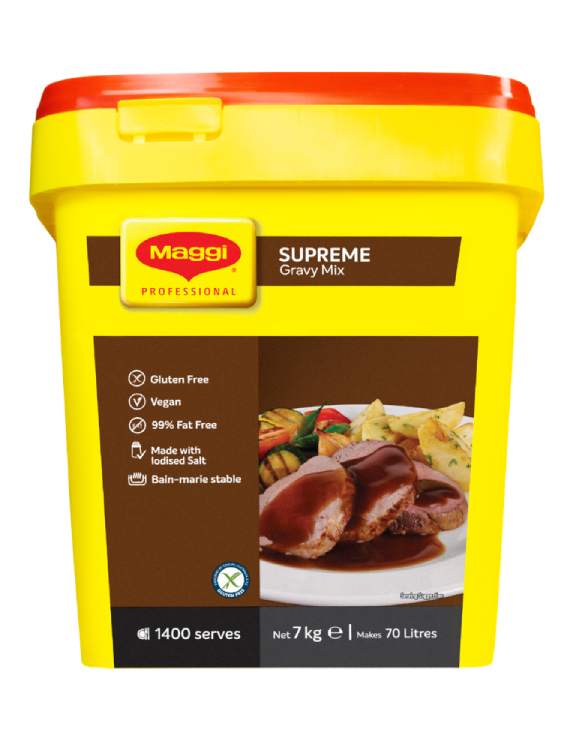
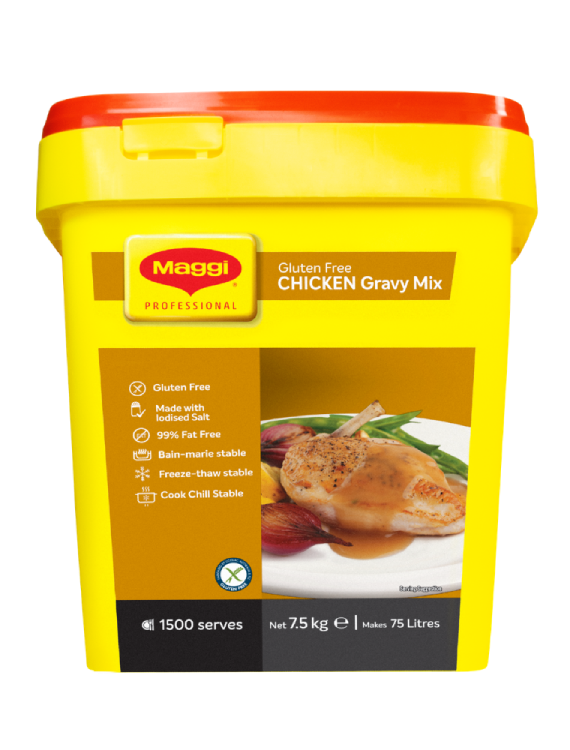
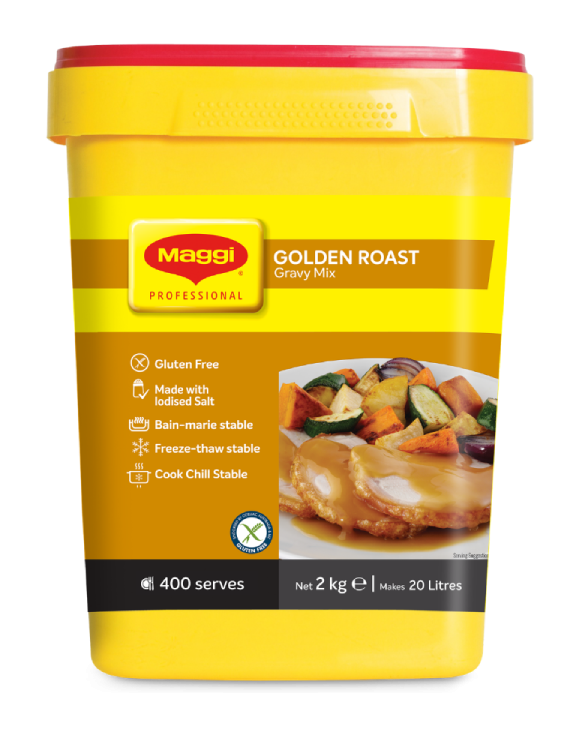
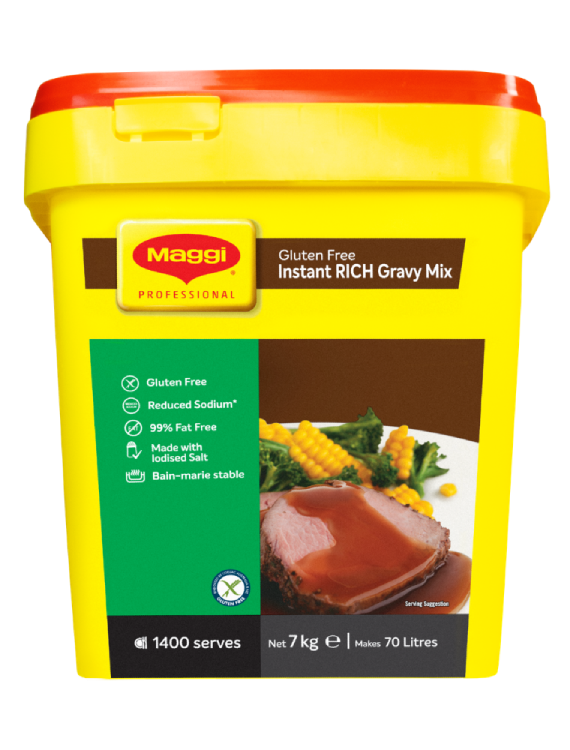
| Attribute | MAGGI Rich Gravy Mix | MAGGI Gluten Free Supreme Gravy Mix | MAGGI Gluten Free Chicken Gravy Mix | MAGGI Golden Roast Gravy Mix | MAGGI Gluten Free Instant Rich Gravy Mix |
|---|---|---|---|---|---|
| Flavour profile | Traditional beef-style, rich and meaty | Full-bodied beef flavour | Juicy flavours of real tender chicken | Light and savoury | Hearty beef-flavoured boldness with reduced sodium |
| Best matched to | Beef, roasts, pies, grilled meats, chips and mash | Dark meats, grilled meats, roast dinners and roasted vegetables | Chicken and white meat dishes, classic chicken schnitzel | White meats and roast dinners | Roast dinners, steak, lamb and chicken dishes |
| Gluten free | Available in a gluten free instant variant | Yes, endorsed by Coeliac Australia | Yes, endorsed by Coeliac Australia | Yes, endorsed by Coeliac Australia | Yes, endorsed by Coeliac Australia |
| Vegetarian / vegan | No | Vegan | No | No | No |
| Bain marie stable* | Yes | Yes | Yes | Yes | Yes |
| Cook-chill stable^ | Yes | Yes | Yes | Yes | Yes |
| Freeze-thaw stable# | Yes | Yes | Yes | Yes | Yes |
| Formats | 2kg and 7.5kg | 2kg and 7kg | 2kg and 7.5kg | 2kg | 2kg and 7kg |
|
|
|
|
|
How Chefs Can Customise Bulk Gravy
The MAGGI Gravy range is a versatile, dependable base you can build on, the way you would a veal stock or a demi-glace, when you want a sauce that’s unmistakably yours. Customise the thickness and flavour of the gravy across a variety of applications – from a pourable sauce, to one made for dipping on the side. With just one gravy mix, you can carry four or five distinct sauces across a service. Here are just a couple of easy recipes to get you inspired.
Examples of Premium Gravy Derivatives:
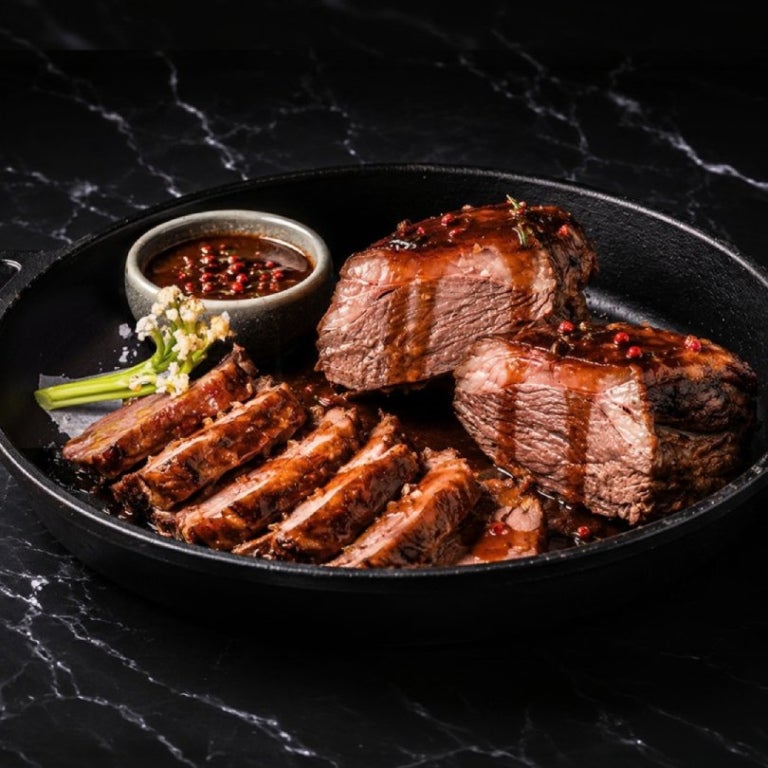
Peppercorn Gravy
Sweat finely diced onion in butter or oil, then add rosemary and crushed pink peppercorns and cook until softened. Deglaze with white wine and reduce by two-thirds, then add half of your water and bring to the boil. Whisk the remaining water with MAGGI Gluten Free Supreme Gravy Mix to form a smooth slurry, pour it into the boiling liquid, return to the boil and simmer for one to two minutes, stirring occasionally. The gravy carries a full-bodied beef flavour on its own, so you are layering heat and aromatics rather than building flavour from scratch. It pairs beautifully with red meats, particularly lamb, where the pepper cuts through the richness without overwhelming it.
Try it with our Lamb Rump with Rosemary and Pink Peppercorn Gravy recipe.
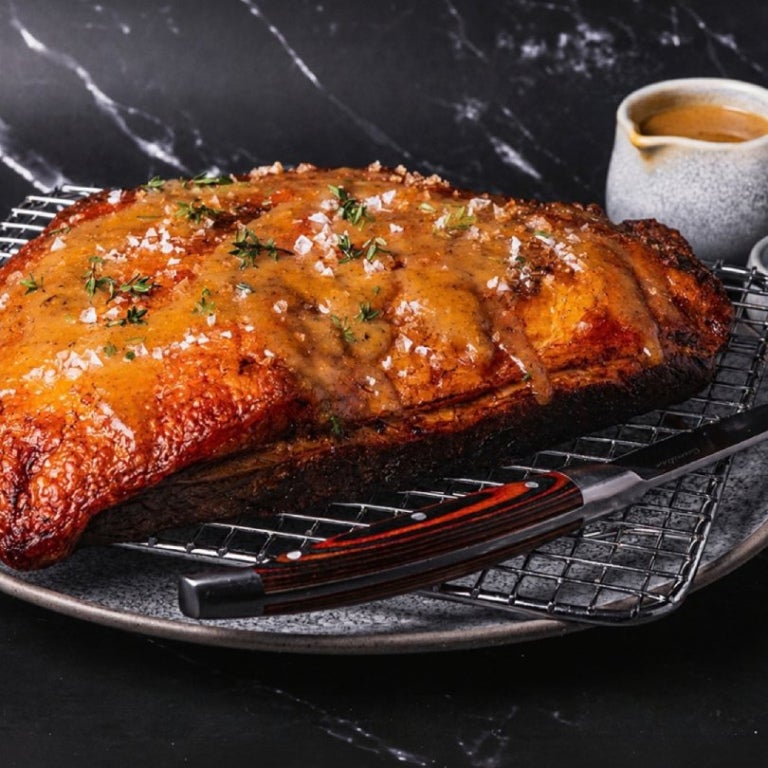
Mustard Gravy
Sweat finely diced onion in butter or oil until softened. Deglaze with bourbon and reduce by two-thirds, then stir through wholegrain and Dijon mustard, add half of your water and bring to the boil. Whisk the remaining water with MAGGI Rich Gravy Mix to form a smooth slurry, pour it into the boiling liquid, return to the boil and simmer for one to two minutes, then season with black pepper. The mustard lifts the base into something sharper and more contemporary and it holds well through service. Ideal for slow-cooked beef, where the sauce needs enough character to stand up to a long braise.
Try it with our Beef Brisket with Mustard Gravy recipe.
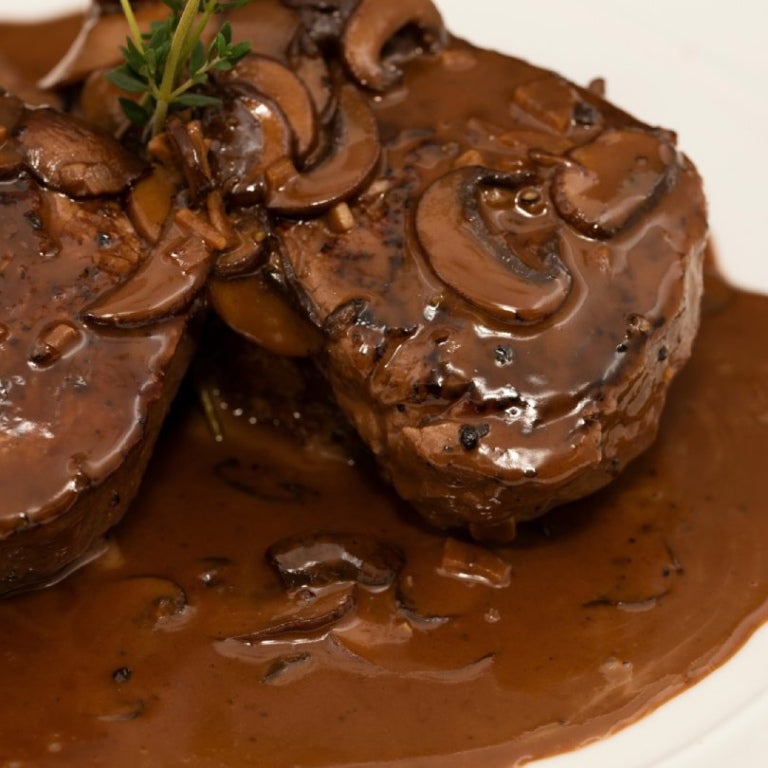
Mushroom Gravy
Sauté sliced field or Swiss brown mushrooms until deeply caramelised, deglaze the pan. Prepare a slurry of MAGGI Rich Gravy Mix, stir through the pan and bring to a boil. Simmer until thick and glossy. The fond from the pan does the heavy lifting and gives the sauce an earthy depth. A reliable choice for steak, schnitzel and pub classics.
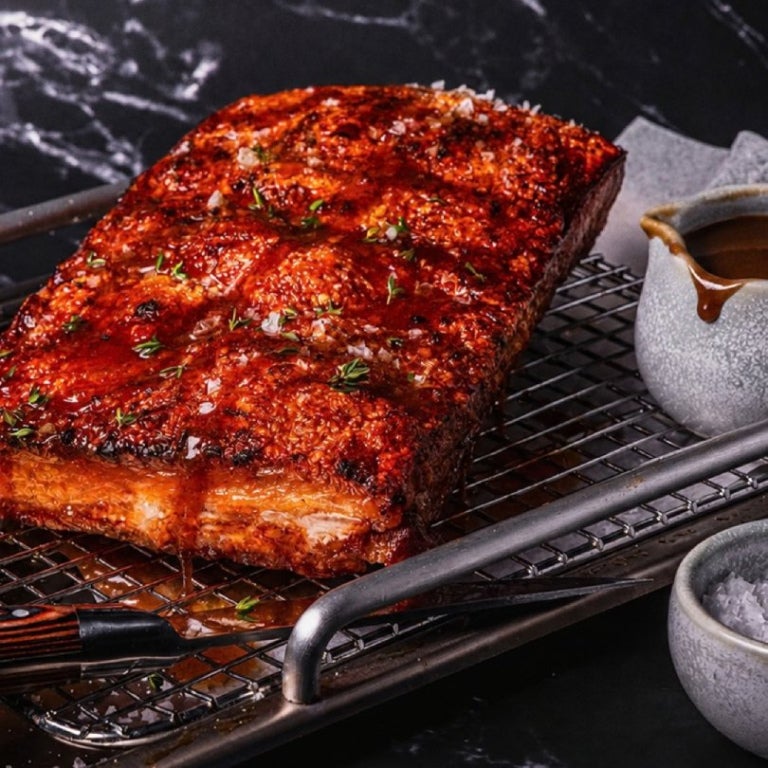
Herb and Pan-Drippings Finishes
For a simple upgrade, reheat the drippings from your roast, along with fresh sage, rosemary or thyme until softened and fragrant. Deglaze with your brandy of choice. Prepare a smooth slurry with MAGGI Golden Roast Gravy Mix, add to the pan and bring to the boil. Simmer for 1-2 minutes until reduced. You keep the character of what you have actually cooked that day while the base guarantees the colour, seasoning and texture are right every time.
Try it with our Pork Belly with Sage and Calvados Gravy recipe.
Bulk Gravy – Your Kitchen’s MVP
For a kitchen working at volume, the question is less about which gravy tastes better and more about which one your team can repeat, shift after shift, without taking over the bench. Scratch will always have its place where time and skill allow. But when you are plating at pace, across multiple sites, or through a long service, a bulk base gives you a dependable starting point and hands the creative work back to your chefs. That's why the MAGGI Gravy range can be the star performer in your kitchen – easy to prep, consistent and the perfect partner to a range of dishes across your menu.
Frequently Asked Questions
*Held covered for no more than 4 hours.
^When prepared as per directions, chilled.
#Thawed under 0-5°C chilled conditions.